
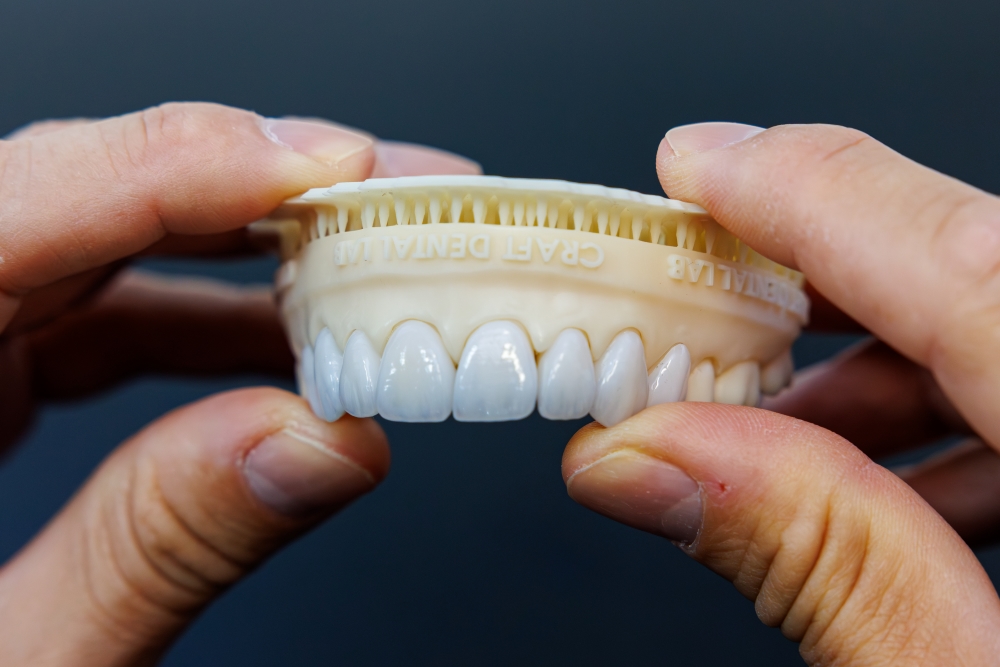
Porcelain veneers are one of the most requested cosmetic treatments in Northwest Florida, and also one of the most misunderstood. They are not a whitening treatment, they are not right for every smile, and the difference between a natural result and an obvious one comes down to design rather than the ceramic itself.
This guide covers what veneers do, who tends to be a good candidate, how they compare with other options, and what to ask before choosing a cosmetic dentist in Destin. Our porcelain veneers in Destin, FL page outlines the treatment itself.
What Porcelain Veneers Are
A porcelain veneer is a thin ceramic shell bonded to the front surface of a tooth. Each one is made for a specific tooth in a specific smile, which is why shade, translucency, length, and surface texture are all decided before fabrication begins.
Because the ceramic covers the visible surface, veneers change color, shape, and proportion at the same time. High-strength porcelain resists staining well and holds its polish far longer than composite materials.
Problems Veneers Can Correct
Veneers are a cosmetic solution, not a substitute for treating disease. Decay, gum problems, and bite issues are addressed first, because bonding ceramic over an unstable foundation is what leads to failures later.
- Chips and worn or uneven edges
- Discoloration that does not respond to whitening
- Small gaps between the front teeth
- Teeth that are narrow, short, or out of proportion
- Minor crowding or rotation in cosmetically visible teeth
Who Makes a Good Candidate
Good candidates generally have healthy gums, sound tooth structure, and specific cosmetic concerns they can describe. Patients who grind or clench are often still candidates, though a nightguard is usually part of the plan.
Significant crowding may be better addressed with orthodontic movement first. Straightening teeth into position before veneering often means less tooth structure is altered and a more natural final result.
Veneers vs Crowns
A veneer covers the front of a tooth. A crown covers the entire tooth. When a tooth is structurally compromised — a large old filling, a root canal, extensive fracture — a crown is usually the appropriate restoration because it protects what remains.
For an intact tooth with a cosmetic concern, a veneer is the more conservative option because less tooth structure is involved. Where a tooth is missing entirely, a dental implant replaces the root rather than the surface.
Veneers vs Bonding
Composite bonding is applied directly in a single visit and costs less up front. It is an effective option for a small chip or a single edge repair.
Composite does pick up stain and lose polish over time, and it is generally less durable than porcelain. Patients treating several teeth at once, or looking for a result that stays stable for years, often find porcelain a better long-term value.
Smile Design and the Consultation
The consultation is where the result is decided. We look at your facial proportions, lip line, midline, and how much tooth shows when you speak and smile, then discuss what you want changed in your own words.
Photographs, digital scans, and a design preview let you see the proposed shape and proportion before any preparation begins. Reviewing the design carefully at this stage is the single best way to avoid surprises later.
Preparation, Temporaries, and Placement
Preparation typically involves conservatively reshaping the front surface of the tooth so the veneer sits flush rather than looking bulky. How much is removed depends on the tooth and the design goals.
Temporary veneers are placed while the final restorations are fabricated. They serve a real purpose beyond appearance: they let you live with the proposed shape and length and give feedback before the case is finalized.
At placement, the veneers are tried in, checked for fit, shade, and bite, and then bonded. Small refinements to edge shape and polish are normal at this visit.
How Natural Veneers Can Look
Veneers look artificial when they are too white, too uniform, or too long for the face. Natural results come from varied translucency, subtle surface texture, and proportions that suit the individual patient.
If you want a bright result, that is entirely achievable — the goal is simply that the brightness is chosen deliberately rather than by default.
Lifespan and Maintenance
With good hygiene and a nightguard where indicated, porcelain veneers commonly last well over a decade, and many last longer. Longevity depends on bite forces, habits, gum health, and routine care.
Day-to-day maintenance is straightforward: brush and floss normally, keep regular hygiene visits, avoid using front teeth on hard objects, and wear a nightguard if you grind.
Factors That Affect Cost
Veneer cost varies with the number of teeth treated, the ceramic used, whether any preparatory treatment is needed, and the complexity of the smile design. Because those factors differ from patient to patient, we provide a written estimate after your consultation rather than a blanket figure.
Financing options are available and are discussed openly before you commit to treatment, and you are welcome to schedule a consultation to review them.
Questions to Ask Before Choosing a Cosmetic Dentist
- May I see your own before-and-after cases, not stock images?
- How will the smile be designed, and will I preview it first?
- How much tooth structure will be removed?
- What happens if I want to adjust the shape at the temporary stage?
- What maintenance will the result require?
Frequently Asked Questions
How many veneers will I need?
It depends on your smile line — how many teeth show when you smile and speak. Many cases involve six to ten upper teeth so the result stays balanced across the visible arch, but some patients treat only two or four. The number is decided during smile design, based on which teeth are visible and which concerns you want addressed.
Do porcelain veneers stain?
High-strength porcelain resists staining considerably better than composite or natural enamel, and it holds its polish over time. The bonded margins and any natural tooth structure still visible can pick up surface stain, so routine hygiene visits matter. Coffee, tea, and red wine will not discolor the ceramic itself the way they can affect natural teeth.
Are veneers reversible?
When enamel is reshaped during preparation, that change is permanent, so veneers should be considered a long-term commitment rather than a temporary treatment. The amount of preparation varies by case and is kept as conservative as the design allows. Your dentist should explain exactly what will be removed before you begin.
Ready to take the next step?
Book your consultation with Dr. Angel Vasquez at our Destin studio, or contact the team with your questions.
Book a Veneer Consultation